The Dundee Setup
How Independence Won Us the Right to Think Without Borders
- Reading time
- 6 min read
- Published
If you grew up in Nigeria, you already know what a "Dundee" is. It is that classic, cross-generational slang for someone who is slow on the uptake, someone who just doesn’t get the big picture, or someone intentionally left in the dark. It’s the ultimate Naija insult for a dullard.
But what if I told you that before October 1st, 1960, keeping us as "Dundees" was not just some casual joke? It was an actual, documented governance strategy.
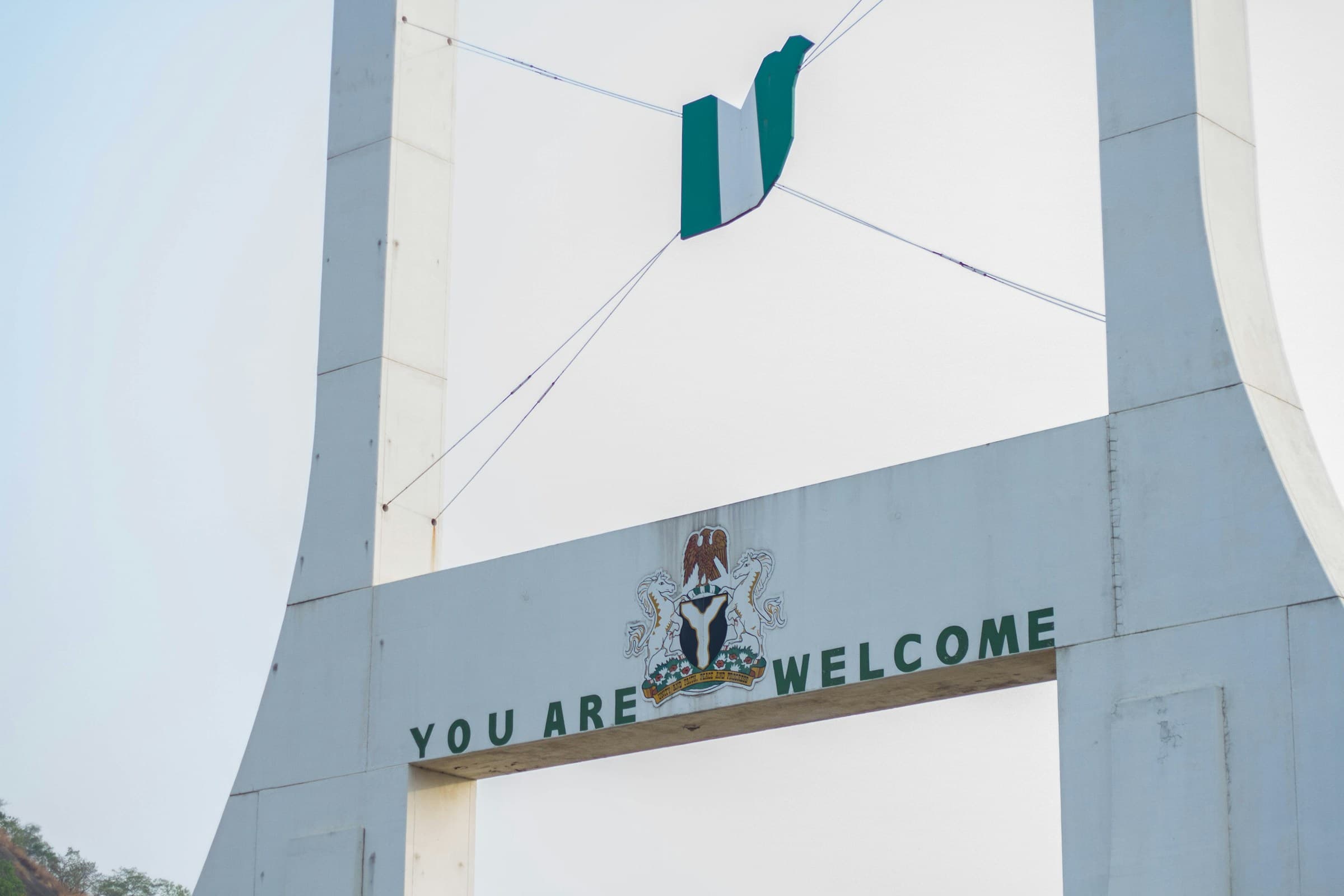
Every year when Independence Day rolls around, our feeds get flooded with the same old generic flyers: a green-white-green flag, a generic stock photo of a smiling family, and the words "Happy Independence Day, Nigeria." But if we truly want to celebrate our freedom, we need to talk about what we actually broke free from.
We did not just gain the right to change our flag or sing a new anthem. We won something far deeper, far more valuable, and heavily gatekept: the unrestricted right to an uncompromised education.
Education as a Tool of Control
When Western-style education first touched the shores of Nigeria in the 1840s, it did not arrive with the intention of creating global giants. The colonial administration was not looking to train the next generation of world-class scientists, groundbreaking tech innovators, or master legal minds.
They had a very specific, very narrow slot for the Nigerian mind. They needed local hands to run the machinery of the empire, but only at the lowest possible level.
Think of it like buying a premium software package but only being allowed to use the free trial version forever. The colonial education system was designed to teach Nigerians just enough English to read standard memos, just enough arithmetic to balance trade ledgers, and just enough obedience to take orders without talking back. It was a "Clerk Factory."
The historical proof is right there in the blueprints. Early colonial policies, like the Education Ordinances of 1882 and 1887, were structured in a way that actively discouraged deep, critical, or scientific thinking for locals. The colonial masters openly feared that if a Nigerian learned too much about advanced logic, international law, or high-level administration, they would naturally look up from their ledger books, look the empire in the eye, and ask: "Why are you even here?"
To prevent those dangerous questions, higher knowledge was rationed like emergency supplies during a drought.
The First Doors Open
Because of this fear, getting a proper secondary education in early colonial Nigeria felt like trying to stream a 4K video on a 2G network. It was agonizingly slow and intentionally restricted.
When missionaries set up the first primary literacy classes in Badagry in 1842, the focus was strictly on basic reading so people could understand religious texts and administrative forms. The colonial apparatus actively pushed back against creating institutions of higher learning. They believed that giving Nigerians access to advanced secondary education would "spoil" them for manual or clerical labor.
It took nearly twenty long years of agitation before the very first secondary school, the CMS Grammar School in Lagos, was finally allowed to open its doors in 1859. And even after that, for decades, secondary schools across the vast geography of Nigeria could be counted on a few fingers.
For the vast majority of our pre-independence history, the British administration flatly refused to build a university on Nigerian soil. If you wanted a degree, if you wanted to study the heavy-chested courses that run societies, the local setup simply told you: "Access Denied."
Education and the Independence Movement
This is where the true narrative of our independence takes a cinematic turn. When our early nationalist heroes looked at the local educational landscape, they realized they were being set up to play small. They saw through the strategy. And because Naija blood naturally rejects being kept in a box, they decided to bypass the gatekeepers entirely.
They packed their bags, boarded ships, and crossed massive oceans to hunt for the very knowledge that was being hidden from them.
- Dr. Nnamdi Azikiwe journeyed all the way to the United States, studying at institutions like Lincoln University and the University of Pennsylvania, absorbing global political theories and media strategies.
- Chief Obafemi Awolowo carved his path to the United Kingdom, studying law at the University of London and pulling down the intellectual barriers meant to keep him out of the courtroom.
They went abroad not to run away from home, but to gather the premium intellectual ammunition they needed to fight for home. They understood a fundamental truth: you cannot dismantle a global setup using only local, rationed crumbs of information.
When these men returned to Nigeria equipped with world-class degrees, standard legal training, and an understanding of global systems, the colonial masters knew the game was up. You cannot call a man a "Dundee" when he understands the law better than the judge enforcing it. It was this exact imported, unfiltered knowledge that fueled the relentless push that eventually brought down the colonial structure on October 1st, 1960.
In fact, the pressure from these educated elites was so intense that it forced the colonial government to finally open University College, Ibadan, in 1948, a mere 12 years before we took full control of our destiny.
The Freedom to Think Without Borders
When you view our history through this lens, October 1st stops being a boring holiday marked by military parades and repetitive speeches. It becomes an intellectual victory.
Today, the educational landscape looks completely different, but the core lesson remains unchanged. The world has gone hyper-global. The challenges we are solving today in tech, finance, governance, and development require an international perspective.
When a young Nigerian decides to study abroad today, it’s easy for people to look at it through the lens of Japa, as an escape or a survival tactic. But historically speaking, going abroad to acquire world-class skills is actually the ultimate expression of the freedom our ancestors bought for us.
Back then, travelling across oceans for an education was an act of rebellion; today, it is your birthright.
The colonial setup failed completely. They wanted a nation of clerks who would never question the status quo. Instead, they got a nation of visionaries, pioneers, and global boundary-breakers. Today, Nigerian brilliance is dominating classrooms from London to Toronto, and from Boston to Berlin.
As we celebrate another year of independence, remember that your mind was never built to be rationed. So, never limit your potential to the nearest border. The world’s best classrooms are waiting for your unique Naija energy, your resilience, and your intelligence.
Go out there, look for the best knowledge the world has to offer, master it, and bring that greatness back home. That is how we truly keep the flag flying.
Happy Independence Day, Nigeria.